|
hawaiisfishes.com
|
|
Home |
Fishes | Invertebrates |
Books | CDs
| Links |
Contact |
|
Some interesting
tunicates (sea squirts) not in Hawaii's
Sea Creatures |
 |
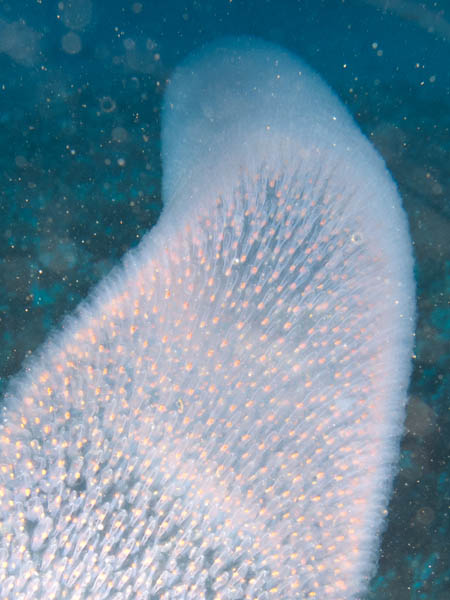 |
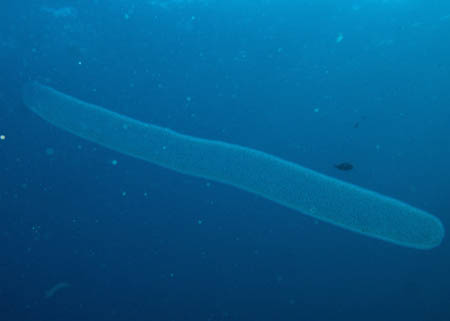 all photos by Zoe Greenberg |
|
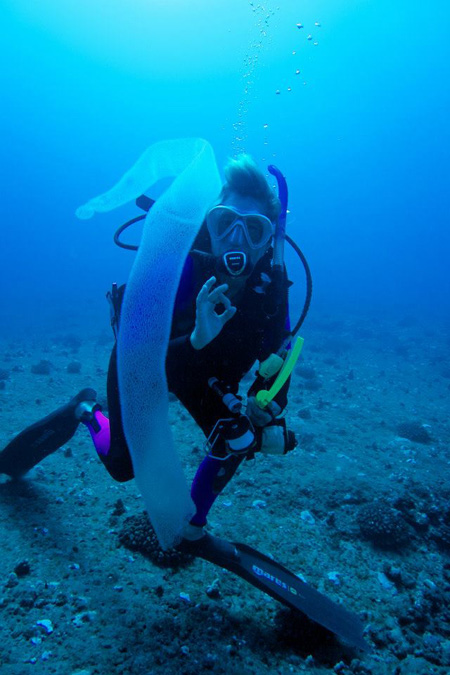
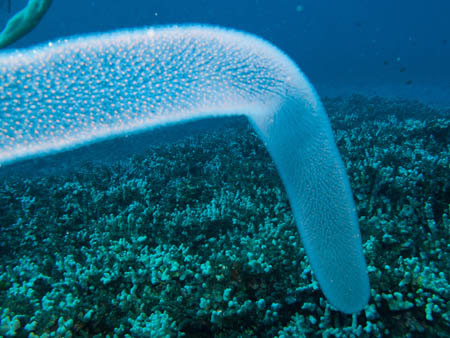
PYROSOMA I |
 |
|
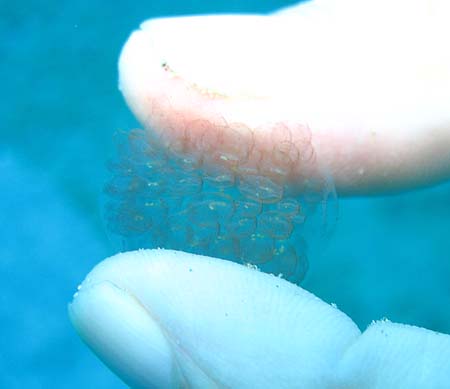
PYROSOMA II |
|
|
|
|
 |
|
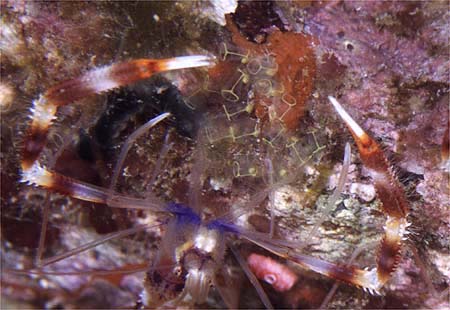
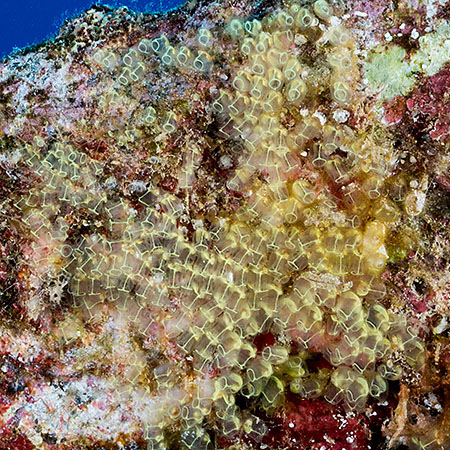
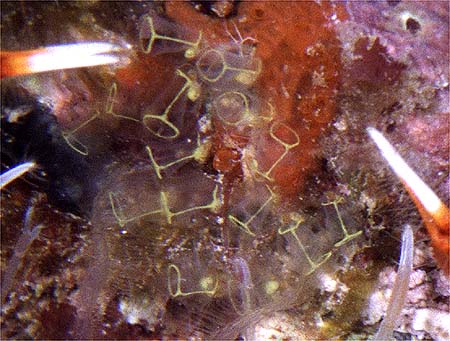
Clavelina sp? While diving at the Pupukea Firehouse in the summer of 2005 I took a photo of two Banded Coral Shrimps (Stenopus hispidus) in a cave at about 80 ft. When I looked at the photos I was delighted to find that between one of the shrimp's claws were some beautiful little tunicates that appear to be a members of the particularly attractive genus Clavelina ("little bottles"). Apparently no representatives of this genus have yet been officially recorded from Hawaii. They sure are small. I don't know that I would ever see them in the field unless I knew exactly where they were in advance. Here is a photo of something similar. Update: In May of 2020 O'ahu diver Shera Mercer sent me her photo of a larger colony of similar tunicates located on the bow of the Mahi wreck, off Waikiki. |
|
|